
when I was a kid
and before I’d learned to read
I pretended I could
I played at reading
what I did was
I sat down with my largest stuffed animal
a - to my young eyes - gigantic Winnie the Pooh
I cuddled into his arms
and I brought out my book of bedtime stories
and I put on my best fairy tale voice
and I started ‘reading’ aloud
it often started with ‘once upon a time’
and continued ‘and did you know’ / ‘and then’
‘and did you know’ / ‘and then’ /
and did you know
that the research on live literature shows that when we read,
even quietly, by ourselves, with the door closed
the auditory cortex is the brain is activated
our ears listen for the narrator’s voice
our bodies still believe that all stories are read aloud to us
and did you know
that it’s not just our hearing but our speaking that remembers
the orality of storytelling
research shows that when we read, even quietly, by ourselves,
with the door closed
we move our teeth, tongue and jaws inaudibly
subvocalize the words
our bodies still believe we are reading all stories aloud to
someone else
and did you know
that research shows
that when someone reads aloud to someone else
me, for example,
if i were to read this poem aloud to you right now
yes, you
(can you hear it?)
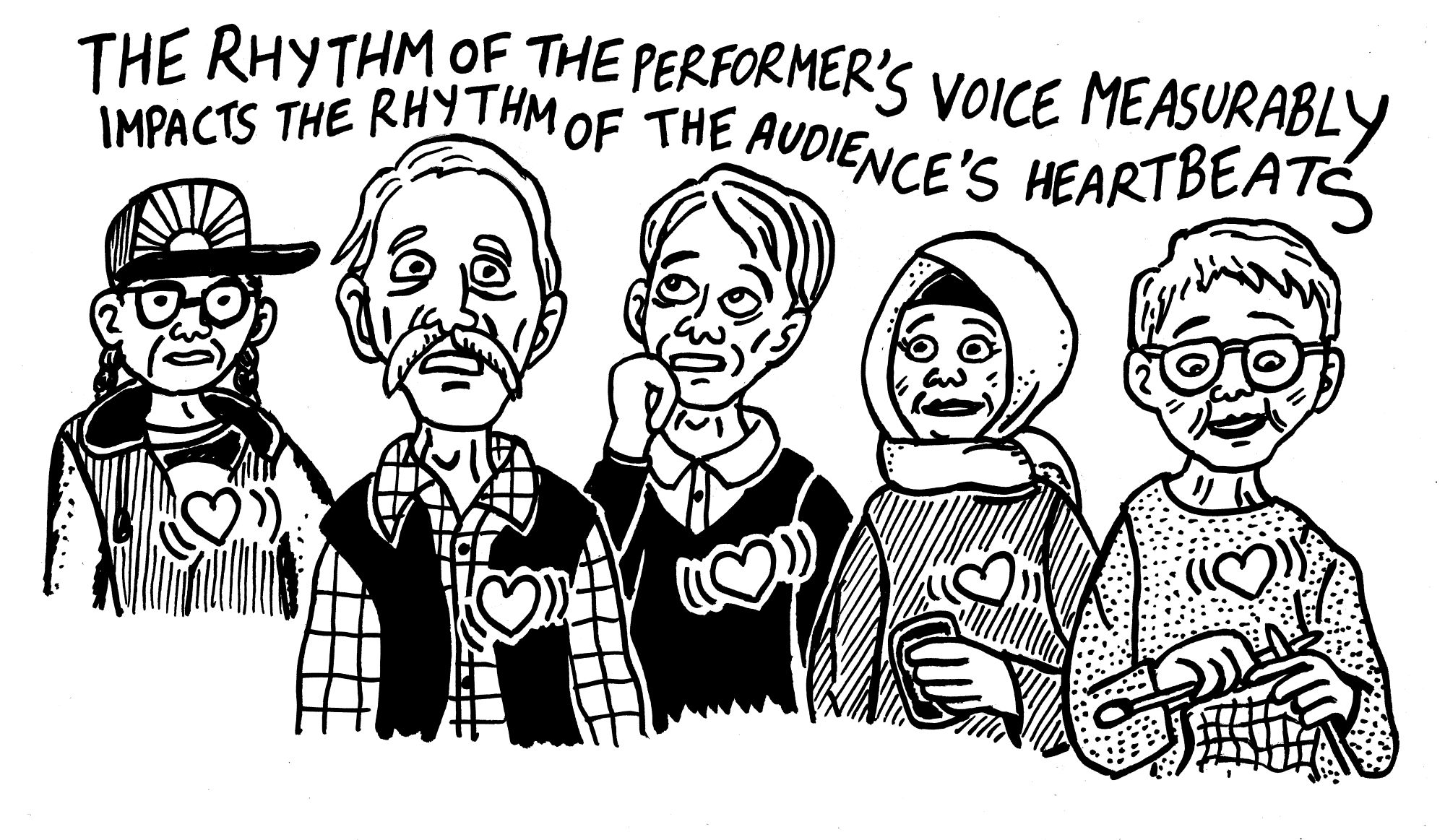
the rhythm of the performer’s voice measurably impacts the rhythm
of the audience’s heart beats
when someone reads aloud to an attentive audience
the listeners’ heart beats begin to synchronize
until, eventually, the hearts of everyone in the room
begin to beat as one
and did you know
that the more our lives, our memories, our experience of time is
fragmented by a thousand short clips on a thousand small screens
viewed without context behind a thousand closed doors
the more time we spend in digital echo chambers where we find it
harder and harder to understand people who don’t see the world
the way we do
to even agree about what’s true
the more we value shared stories
collective experiences alongside other people
to feel, for a moment, how our hearts beat as one
and did you know
that research shows that if you ever read this poem written down after having heard it in my voice, you will automatically feel as if I were there, with you, reading it to you
so much so that if I’d pause
here
–
or suddenly start speaking faster and faster as if in a rush to reach
the end of the line without so much as stopping to breathe or
punctuate your mirror neurons will automatically activate and your
body will begin to mirror my voice become more stressed
or more calm
or experience the emotion my voice betrays
the feelings between the lines
reading or listening to story or poetry
is actively training our imagination and empathy
research shows that when we read and listen to stories
we practice stepping into someone else’s shoes
imagine being someone other than who we are
believe possible more than what we’ve seen so far
people who read regularly
are more likely to feel
that they can not only understand
but also change
the world around them
because reading is not just something to do quietly
to ourselves, with the door closed
it is what opens our doors to each other
taking part in literature
is to share
for a moment
an experience with others
to be reminded of what our bodies already know
that reading is something we do together
something we urgently need
to build trust and empathy
hope and democracy
to weave a shared story of an inclusive ‘we’
and did you know
that is true
whether what you do
is write a poem for a stranger (yes, you!)
or invent a bed-time story for your stuffed Winnie the Pooh