
Stories From Sweden brings Swedish literature to new audiences
With more than 50 events featuring Swedish authors, Stories From Sweden is now in its second year. We asked Martin Colthorpe, director of Modern Culture, to tell us more about the project and its work to promote Swedish literature in translation.
Hi Martin!
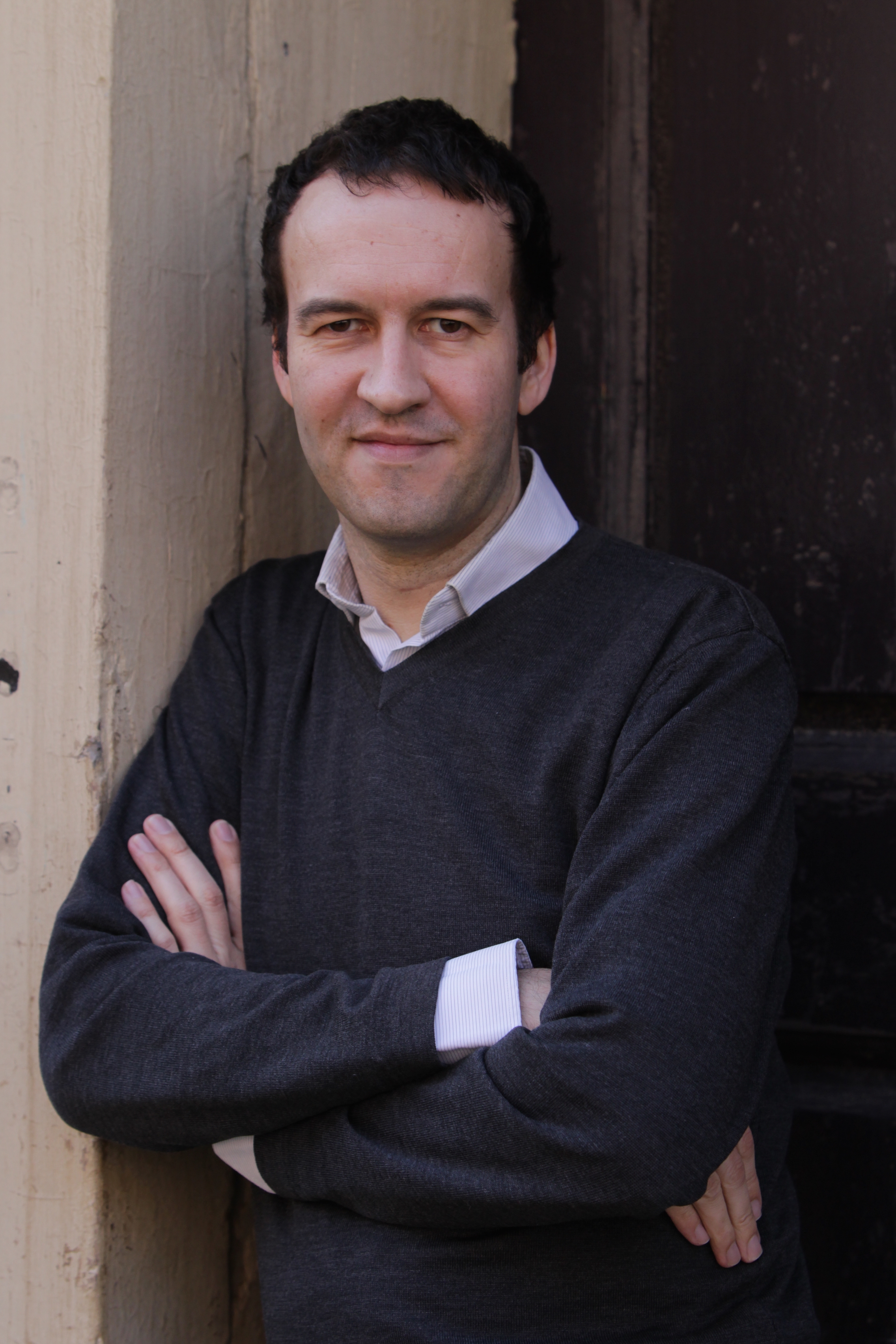
What kind of agency is Modern Culture, and who’s behind it?
Modern Culture is an agency for programming literary events, which I set up when I began working freelance in 2012. My aim has always been to work with international writers and translators and, also to approach literature in a wider cultural context, by programming writers alongside their translators but also artists from other fields such as photography and film.
What is the Stories from Sweden project about?
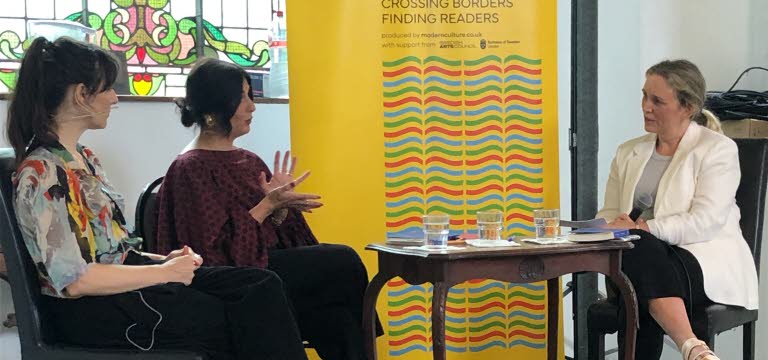
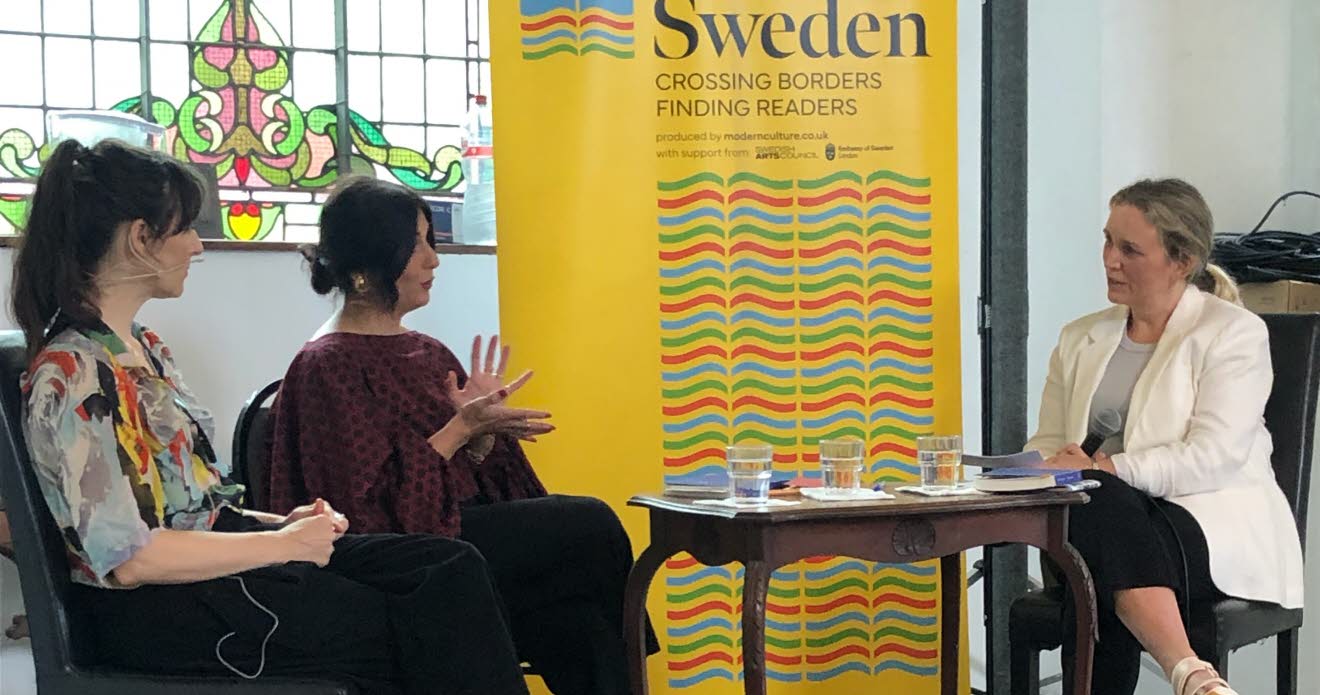
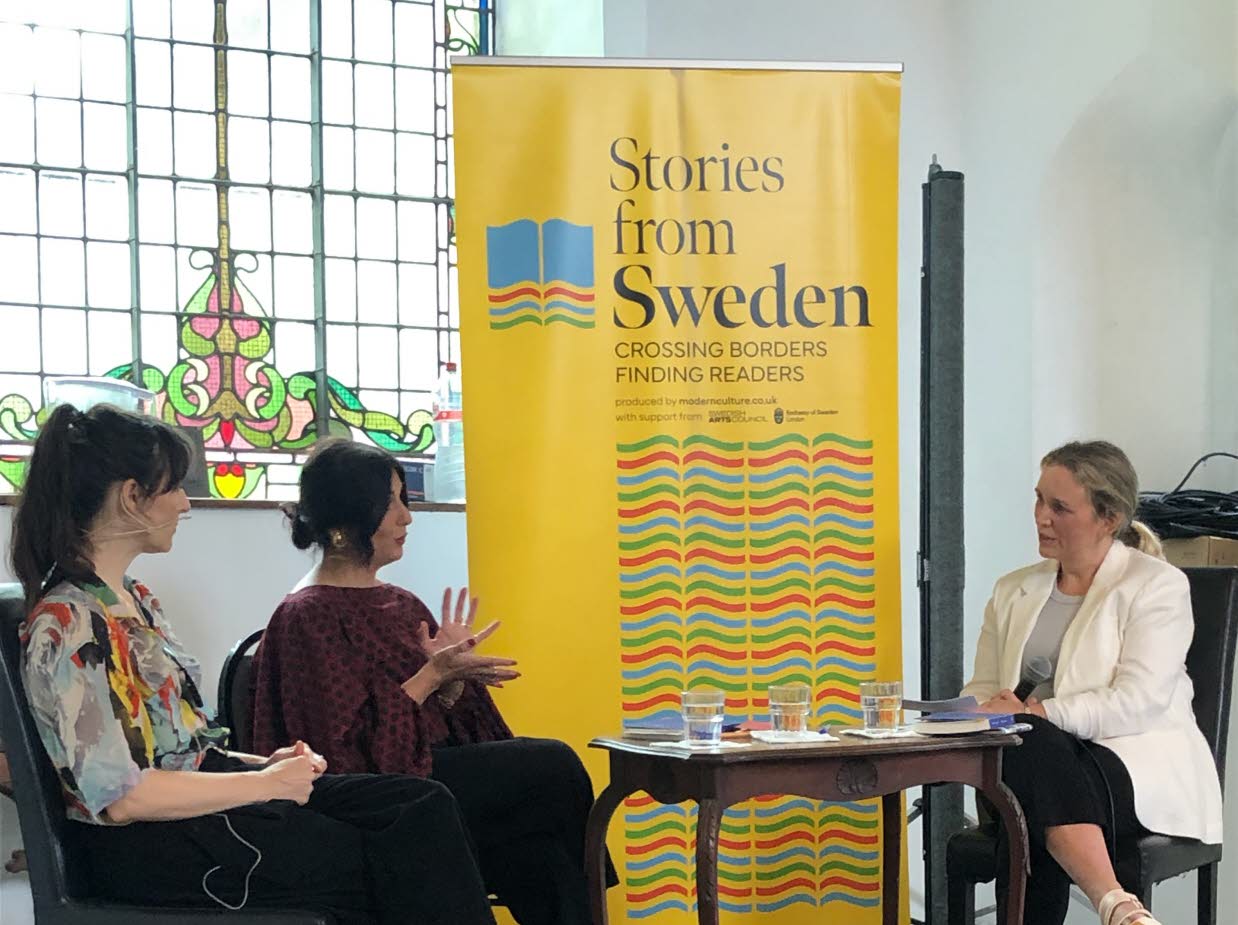
The aim of Stories From Sweden is to raise the profile of Swedish literature by giving Swedish authors and translators a platform at public events, at literary festivals and bookshops, in both the UK and Ireland. I act as a link between publishers, festivals, bookshops and literary organisations, while also coordinating the branding, pitching and logistics that make the events happen. And at the heart of Stories From Sweden are the translators who bring the works into English.
Audiences in the UK and Ireland are beginning to read more in translation, and indie publishers and indie bookshops are reflecting this in the works they publish and the range of books they sell, respectively. Nevertheless, when people think of books from Sweden, they tend to think first of Scandi-crime, but are perhaps less aware of the wider publishing landscape.
How do you select the authors?
In any year, there is a wide variety of books being published in translation from Swedish, covering all the main genres like fiction, poetry, non-fiction, crime and children’s books. I want to be fair to all of the authors and give as many people a chance to participate as possible. However, some authors, notably novelists, tend to attract more attention from literary festivals and especially from indie bookshops. This is perhaps because when readers think of ‘translation’ they tend to think of novels first, rather than, say, science or history books.
The last decade or so has seen a big rise in the number of indie bookshops putting on events programmes, and these shops have tended to showcase books - often fiction - published by the new wave of indie presses. However, we’ve had considerable success with more specialist festivals too. I was really delighted to invite poet Judith Kiros to two festivals in the UK last summer - the European Poetry Festival and Ledbury Poetry Festival, which takes place in rural Herefordshire. Judith’s debut poetry collection O, translated by Kira Josefsson, based loosely on the story of Othello, was published by the US publisher World Poetry. Including Judith in the programme reflects the freedom that I have as a programmer to include authors and books from across a wide spectrum. The key stipulation for the project is that the books selected should be in translation, and must first have been published in Sweden by a Swedish publisher.
The trips are often organised as tours. Could you tell us more about the concept? Is there a sustainability aspect to the setup?
Inviting an author to tour the UK or Ireland (or both) is positive from the perspective of both finances and sustainability. When an author is on a more extensive visit, I often work closely with a publisher on the organization of the tour. For example, I recently worked alongside Fitzcarraldo Editions to support events for Balsam Karam’s new novel Event Horizon (Händelsehorisonten), translated by Saskia Vogel. Balsam visited five cities across the UK and Ireland, with Saskia joining her for three of the events. It was a very successful tour, combining indie bookshops in the UK with two festivals in Ireland - Cúirt International Festival of Literature and Cork World Book Fest. We want Stories From Sweden to be sustainable, with author and translator tours being as extensive as possible
How have you worked to reach out and market the project?
I worked with a graphic designer to come up with the brand identity, and the core image evokes both the sea and the pages of a book – I think it's direct and powerful. We've designed banners and tote bags which look great at festivals, but the majority of the event promotion has been on Instagram, which I think is the best platform for literary and cultural events. Check out moderncultureprogramming to find out about upcoming events!
What do you think of the interest in Swedish literature in the UK?
One of the pleasures of working on Stories From Sweden is the opportunity to focus on a specific country, and to allow more room for the different languages and identities that are a part of its cultural mosaic.
There’s no doubt that UK audiences - and in particular younger generation readers aged 18–35 - are taking a much keener interest in translated literature than they were 10 years ago. Stories From Sweden allows audiences to develop their knowledge of Swedish writing specifically, often within the space of one festival.
The events with Swedish authors have been very well received, with insightful questions about culture and translation, and alongside festivals, indie bookshops have been fertile ground for these discussions. Their stock is much more curated than larger bookshops, the venues are smaller, and as a result, the events have a more intimate and focused feel for audiences.
Can you share an event that was particularly successful?
I was very pleased with our events at Manchester Literature Festival last autumn 2025. I thought the programming and selection of authors was spot on. The festival selected two Swedish-focused events to run consecutively on a Sunday afternoon, and gave them space within the festival by not programming other events at the same time.
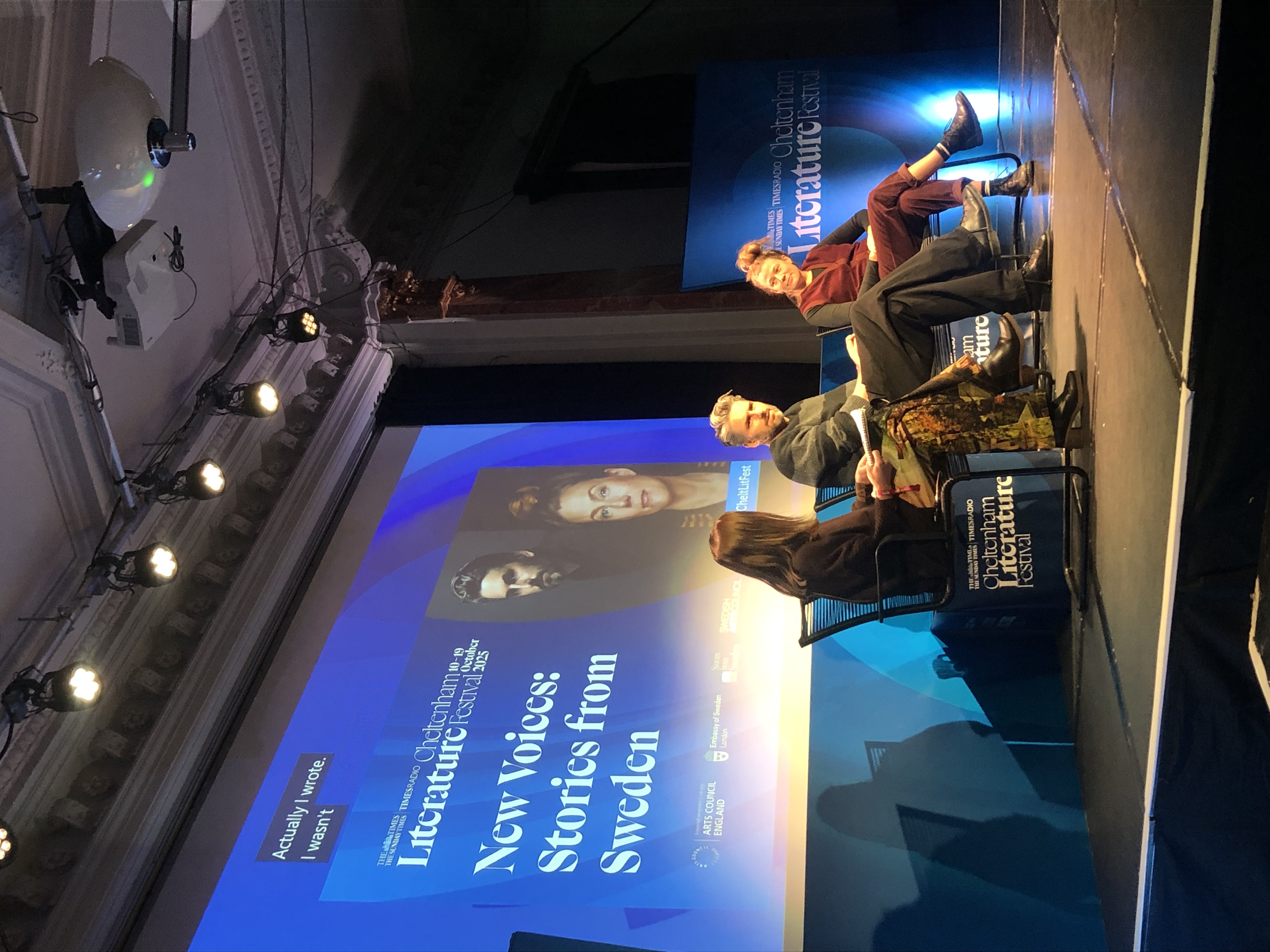
The first event featured Andrev Walden, discussing Bloody Awful In Different Ways (Jävla karlar), translated by Ian Giles. Naomi Frisby moderated the conversation, which was attended by around 90 people. Andrev’s natural charisma and wit proved very popular. He was followed by a double-bill featuring Agnes Lidbeck on Supporting Act (Finna sig), translated by Nichola Smalley, and Lisa Ridzén on When The Cranes Fly South (Tranorna flyger söderut), translated by Alison Menzies.
Bringing the two authors together, around the shared themes of identity, community, care and gender, was clever curation, particularly as it brought together a writer from a smaller indie press (Agnes), with a writer (Lisa) whose book is published by a more commercial published which has been much more popular (reaching the Sunday Times Bestseller List in the UK). Sometimes pairing two authors from the same country can feel contrived, but I thought the event was a great conversation. Both events were really well attended and lots of people bought books afterwards!
What insights will you carry forward into future events?
I would like to continue broadening the scope of the events we offer. Last month we did our first Stories From Sweden events for kids and family audiences when Anders Sparring and Per Gustavsson took The Pinchers series of books (Familjen Knyckertz), translated by Julia Marshall, to festivals in Dublin and Hay. And this week we are doing our first science events when Jonas Enander will talk about Facing Infinity: Black Holes and our Place on Earth (Mörkret och människan: om svarta hål och vår plats på jorden), translated by Nichola Smalley, to Cheltenham Science Festival. I’d like to follow this with some events at crime writing festivals and to do more events with non-fiction books in general.
When I was researching Stories From Sweden I read Marit Kapla’s book Osebol, translated by Peter Graves, and I thought it was fascinating, not just in its verbatim interview style, but for how it portrayed recent Swedish history. Alongside working with a wider range of genres, I’d also like to include more translators on stage alongside their authors, and to develop a series of online translation workshops, which have been very successful as part of my projects with Dutch and Flemish writers.